From infrastructure cost to marketing asset in the guest room
A hospitality video distribution system is often treated as a technical line item. Yet for any hotel that cares about brand, this same digital system can become a powerful marketing and communication channel. The shift starts when marketing leaders see every room television as a premium owned media surface.
In practice, this means aligning room entertainment with your positioning, your services, and your local attractions strategy. Instead of a generic video grid, the guest sees curated content that reflects the hotel identity and the wider destination story. The hospitality team gains a direct line to the guest, without relying only on email or paid media.
Modern hotels already invest in IPTV platforms, hdmi based headends, and RF or IP video distribution to deliver television channels. When marketing takes ownership of the content layer, the same distribution system can highlight upsell offers, promote bars restaurants, and guide guests to signature experiences. This transforms a pure cost center into a measurable business driver.
For multi property groups, a standardized hospitality video distribution system also supports consistent brand storytelling. Central teams can push video campaigns, digital signage playlists, and room entertainment templates across hotels while allowing local teams to adapt messages. This balance between control and flexibility is essential for both guest experience and operational efficiency.
Marketing leaders should therefore sit at the table when specifying audio video architectures, sources displays strategies, and IPTV middleware. Decisions about ethernet switch capacity, scale video capabilities, and pro idiom compatibility directly influence what content can be delivered. Treating the television as a silent salesperson changes the business case for every future upgrade.
Designing content journeys across room, lobby, and bars restaurants
Once the infrastructure is in place, the next challenge is orchestrating content journeys across the property. A hospitality video distribution system should not separate room entertainment from lobby screens and bars restaurants video walls. Instead, it should create a coherent narrative that follows the guest from check in to check out.
In the room, the first screen after check in is prime real estate for marketing and communication. Here, the hotel can present a short video about services, local attractions, and signature experiences, framed as a welcome rather than a sales pitch. This is also the ideal place to explain how to use the IPTV interface, entertainment options, and any hotel distribution features.
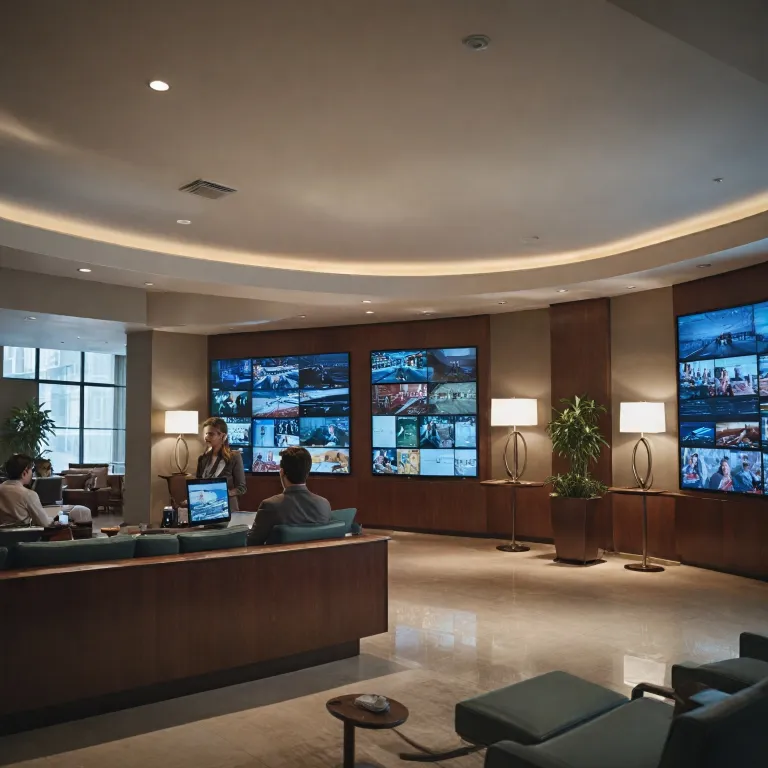
In public areas, digital signage and video wall installations can extend the same storytelling. A sports bar might use a flexible video distribution system to show multiple matches while reserving one video wall for brand content between games. A bar restaurant can highlight chef specials, mixology classes, or live music, all managed from the same control console as the guest room televisions.
For marketing teams, the key is to define clear content categories and rules. Brand films, destination videos, and case studies about sustainability or community projects can rotate at low frequency. Tactical messages about spa offers, late checkout, or meeting room packages can be scheduled dynamically based on occupancy and segment mix.
Because 66 % of travelers consult video from inspiration to booking, the same creative assets can be repurposed inside the property. The hospitality video distribution system becomes the final step in a continuous digital journey, reinforcing messages that started on social media or the booking engine. This continuity strengthens both guest experience and conversion.
Technical choices that shape marketing, from hdmi to IPTV
Behind every elegant on screen experience lies a series of technical decisions that marketing leaders should understand. The choice between RF based hotel distribution and full IPTV over ethernet switch networks has direct implications for content agility. RF modulators and coaxial infrastructures are robust, while IP based systems offer finer control and richer interactivity.
Solutions such as the VECOAX BLADE HDMI to Coax RF Modulator System show how hotels can reuse existing cabling. This type of distribution system sends hdmi sources to all room televisions without disruptive works, which is attractive for mature properties. However, marketers must accept some limits on personalization compared with fully addressable IPTV architectures.
IPTV solutions, like those using middleware similar to Atlas, enable granular content targeting and room level control. Marketing teams can push different video playlists to suites, family rooms, or meeting floors, aligning entertainment options with segment expectations. Integration with property management systems also allows welcome messages and offers to reflect guest profiles.
Audio video routing over IP further simplifies complex venues such as sports bars or multi outlet hotels. With the right sources displays mapping, operators can send any channel or branded content to any screen, including video walls and private dining rooms. This flexibility is particularly valuable for events, sponsorship activations, and corporate takeovers.
Whatever the architecture, pro idiom compatibility remains essential for encrypted premium channels. Marketing leaders should work closely with IT and integrators to ensure that content ambitions match the capabilities of the hospitality video distribution system. A clear roadmap avoids investing in platforms that cannot support future guest experience strategies.
Turning guest experience data into communication intelligence
When treated as a marketing platform, the hospitality video distribution system becomes a rich source of behavioral data. Usage patterns across room entertainment, digital signage, and bars restaurants screens reveal what truly engages guests. This information can guide both content creation and broader communication strategies.
For example, tracking which local attractions videos generate the most interactions helps refine destination marketing partnerships. If guests repeatedly watch content about outdoor activities, the hotel can adjust packages, lobby displays, and even concierge scripts. Similarly, low engagement with certain services videos may signal a need to rethink the offer or the storytelling.
Case studies from sports bars show how centralized control simplifies operations while improving the fan experience. One documented case study describes how a venue managed 38 LG 4K televisions through a unified Mediatune system, reducing manual intervention. The same principles apply to hotels that want to orchestrate multiple sources displays across lobbies, corridors, and meeting spaces.
Marketing teams should also connect video distribution analytics with CRM and campaign data. If a guest clicks on a spa promotion on the television and later redeems it, that journey should inform future segmentation. Over time, the hotel can build a library of internal case studies that quantify the incremental revenue from on screen communication.
To deepen this intelligence, consider how external thought leadership on hospitality visibility and communication can complement internal data. Resources such as this analysis of how event calendars shape marketing visibility in hospitality (see strategic hospitality visibility planning) help frame investment decisions. Combining qualitative insights with quantitative usage metrics strengthens the business case for continuous improvement.
Brand partnerships, monetization, and destination storytelling
Beyond internal promotions, a sophisticated hospitality video distribution system opens new monetization and partnership opportunities. Hotels can collaborate with local attractions, tourism boards, and brands to co create content that enriches the guest experience. When executed carefully, these partnerships feel like added value rather than intrusive advertising.
Destination videos that highlight museums, cultural venues, or outdoor experiences can run as part of the room entertainment carousel. In exchange, partners may contribute production budgets or cross promotion on their own digital channels. The hotel retains editorial control to ensure that all content aligns with its positioning and service promise.
Bars restaurants and sports bars within the property can also benefit from curated entertainment options. A flexible video distribution system allows operators to combine live sports, branded storytelling, and subtle product placement on video walls. This approach supports both beverage sales and brand equity, especially when audio video levels and screen layouts are carefully designed.
For groups, standardized templates for hotel distribution of partner content simplify compliance and measurement. Central teams can negotiate framework agreements while local properties adapt playlists to their specific markets. Over time, a portfolio of case studies will show which formats and durations perform best across different segments.
To maintain trust, transparency with the guest is essential. Clear labeling of sponsored segments and a strong focus on informative, high quality video content protect the perceived integrity of the hotel. When guests feel that the system genuinely enhances their stay, they are more receptive to relevant commercial messages.
Governance, collaboration, and future proofing your video ecosystem
Extracting full value from a hospitality video distribution system requires robust governance and cross functional collaboration. Marketing, IT, operations, and sometimes owners must align on objectives, budgets, and success metrics. Without this structure, even the most advanced digital infrastructure risks being underused.
Marketing leaders should define a clear content governance model covering brand standards, approval workflows, and refresh cycles. This includes guidelines for room entertainment, digital signage, and any bar restaurant or sports bars screens. A shared calendar ensures that seasonal campaigns, events, and destination stories are reflected consistently across all televisions.
On the technical side, IT teams must plan for scalability, security, and interoperability. Choosing systems that support IP based video distribution, pro idiom, and flexible scale video capabilities will protect investments. Regular reviews with providers such as Amadeus Hospitality, ZeeVee, StreamVision, earthTV, or Pro Video Instruments can help benchmark against industry best practices.
Future proofing also means anticipating new content formats and guest expectations. As more guests arrive with their own devices, casting and bring your own content features should complement, not replace, curated hotel content. The distribution system must balance personal choice with the hotel’s desire to communicate its services and identity.
Finally, leadership should treat the hospitality video distribution system as a living ecosystem rather than a one off project. Continuous testing, case studies, and feedback loops will keep the platform aligned with evolving guest experience standards. In a competitive market, the hotels that master this owned media channel will gain a subtle but powerful advantage.
Key statistics for hospitality video distribution strategy
- 66 % of travelers consult video from inspiration to booking, making on property content a critical last mile touchpoint.
- A documented sports bar case study managed 38 LG 4K televisions through a centralized system, illustrating the operational benefits of unified video distribution.
Frequently asked questions about hospitality video distribution systems
What is a hospitality video distribution system?
A hospitality video distribution system is a technology that enables hotels and similar establishments to deliver video content, such as television channels and on demand services, to guest rooms and public areas.
How do IP based video distribution systems benefit hotels?
IP based video distribution systems offer scalability, flexibility, and high quality content delivery, allowing hotels to enhance guest experiences and streamline operations.
Can existing coaxial infrastructure be used for HD content delivery in hotels?
Yes, technologies like RF modulators allow hotels to distribute HD content over existing coaxial cable infrastructure without the need for additional wiring.
What role do interactive video players play in hospitality video distribution?
Interactive video players enable guests to engage with content, access on demand services, and receive personalized information, enhancing their overall experience.
How can video distribution systems integrate with hotel management systems?
Video distribution systems can integrate with hotel management systems to provide centralized control over content delivery, billing, and guest preferences, leading to more efficient operations.