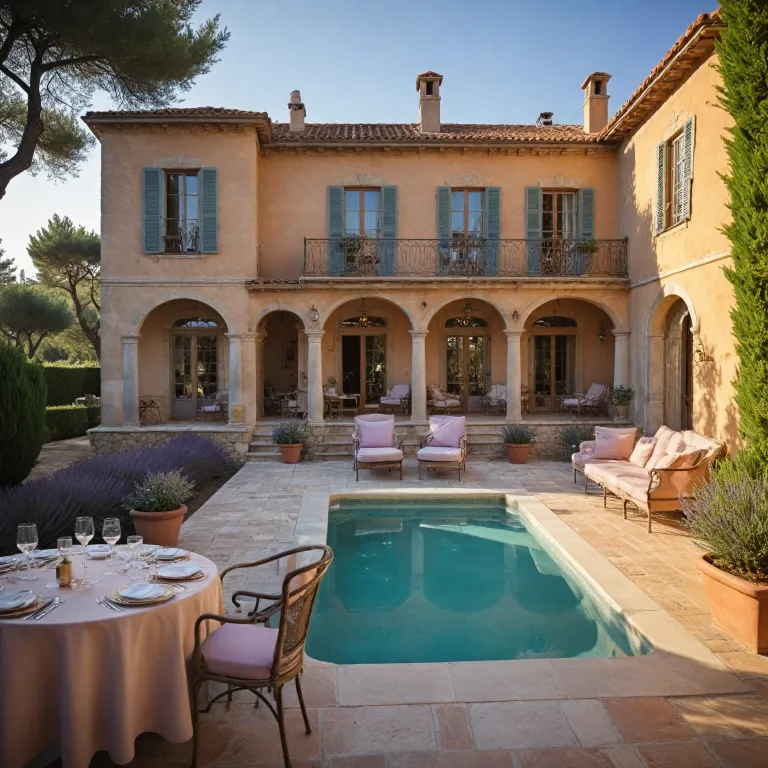
Reframing visibility for luxury hotels in Provence
Luxury hotels in Provence compete in a crowded France hotel landscape. Marketing leaders must transform visibility into measurable demand while preserving the emotional power of the region. The challenge is sharper for each independent hotel and for multi property groups.
For every luxury hotel, the room mix, the average price, and the guest profile shape the communication strategy. A Provence hotel in a quiet village will not speak like a flagship on the French Riviera, even if both promote a panoramic view and a heated pool. Yet both must orchestrate consistent storytelling across brand website, booking engines, OTAs, and social media.
In this context, the expression “luxury hotels Provence” should not be treated as a simple SEO keyword. It becomes a strategic narrative that links the region, the hotel, and the guest journey from first search to post stay reviews. Marketing directors must align CRM, media, and content so that every room and every suite supports this narrative.
Cheval Blanc St Tropez, Grand Hôtel du Cap Ferrat, and Château La Coste illustrate three complementary visibility models. One leverages a legendary village on the Riviera, another capitalizes on a sculpture park and organic domaine, and the third amplifies a historic resort with Michelin starred dining. For each, the art direction of the terrace, the design of the swimming pool, and the framing of every room terrace photo are as strategic as any media plan.
For offices de tourisme and travel marketing agencies, the priority is to connect these individual stories into a coherent Provence France promise. That promise must feel equally relevant to guests staying in Lourmarin, Saint Rémy, or Saint Tropez, and to those exploring more discreet places such as Saint Saturnin lès Apt. Only then can “luxury hotels Provence” become a powerful regional brand asset rather than a generic search term.
Designing a demand engine around the Provence guest journey
To turn visibility into bookings, luxury hotels in Provence need a precise demand engine. This engine starts long before a guest decides which hotel to book in France. It begins with how the region appears in search results, social feeds, and media coverage.
Marketing leaders must map the full journey from inspiration to post stay advocacy. A potential guest might first see a photo of an outdoor pool at Domaine de Manville, then read reviews about a room with a terrace at a bastide near Saint Rémy Provence, and finally compare the price of several hotels resorts across the region. Each touchpoint should gently guide them toward direct booking on the official Provence hotel website.
Content must reflect the diversity of Provence France without diluting each property’s identity. A château near Lourmarin will highlight art, vineyards, and a calm pool, while a Riviera hotel will emphasize sea view, private terrace, and proximity to the French Riviera nightlife. Yet both must reassure guests about transparent price policies, flexible booking conditions, and credible reviews.
Regulation adds another layer of complexity for every France hotel. Data privacy, rate parity, and consent management can either slow down campaigns or become a competitive advantage. When marketing teams treat hospitality compliance solutions as a strategic asset, they can build trust and improve conversion at the same time ; detailed guidance is available in this analysis on turning hospitality compliance into a strategic advantage.
For offices de tourisme, the same logic applies at destination level. They must orchestrate campaigns that highlight villages such as Saint Saturnin lès Apt, domaines like Domaine de Fontenille, and icons such as Hotel Crillon le Brave without creating internal competition. The goal is to grow the entire market for luxury hotels Provence, then help each property capture its fair share of qualified demand.
Owning the narrative of luxury hotels Provence across channels
In the luxury segment, narrative control is as important as media budget. If OTAs and intermediaries own the story of luxury hotels Provence, direct bookings and brand equity will erode. Marketing directors must therefore reclaim the narrative across every channel.
On brand websites, content should go far beyond generic descriptions of rooms and pools. A hotel in Saint Rémy Provence can structure its storytelling around the village, the surrounding domaine, and the art of living on a shaded terrace, while a Riviera property focuses on the French Riviera coastline and the glamour of the region. Each Provence hotel should present clear room categories, transparent price ranges, and authentic guest reviews.
Paid media is a powerful lever when aligned with this narrative. Campaigns that simply bid on “luxury hotels Provence” or “France hotel” risk attracting unqualified traffic and depressing ROI. Instead, marketing teams should build granular campaigns around specific assets such as a room terrace with Alpilles view, an outdoor pool facing vineyards near Lourmarin, or a château experience at Château La Coste.
Specialized partners can help transform paid media into profitable direct bookings. For example, this playbook on how a hotel PPC agency transforms paid media shows how to align keyword strategy, ad copy, and landing pages with the guest journey. When campaigns highlight concrete benefits such as flexible booking, guaranteed best price, and access to exclusive pool or spa experiences, conversion rates improve significantly.
Social media and PR should echo the same storyline. A carousel showing sunrise over the pool at Domaine de Manville, a video walk through of a suite at Hotel Crillon le Brave, or a behind the scenes look at art installations at Château La Coste all reinforce the perception of Provence France as a refined, contemporary destination. Offices de tourisme can then amplify these narratives by curating content from multiple hotels resorts, villages, and domaines into cohesive campaigns.
Leveraging place based storytelling from village to Riviera
Place based storytelling is the most underused asset in the marketing of luxury hotels Provence. Too many campaigns reduce the region to lavender fields and generic blue pools. In reality, each village, domaine, and château offers a distinct narrative that can attract highly qualified guests.
Consider the contrast between Lourmarin, Saint Rémy, and Saint Saturnin lès Apt. A hotel near Lourmarin might emphasize design, contemporary art, and a pool framed by vineyards at a domaine such as Domaine de Fontenille. In Saint Rémy Provence, a bastide like Bastide de Marie can focus on heritage, gastronomy, and intimate rooms with a terrace overlooking olive groves.
Further east, the French Riviera adds another layer to the Provence France story. Properties such as Cheval Blanc St Tropez or Grand Hôtel du Cap Ferrat blend resort style pools, sea view rooms, and Michelin starred dining with the glamour of the Riviera. Here, the narrative revolves around the interplay between the hotel, the village, and the coastline rather than the countryside.
Château La Coste offers yet another model by integrating art, architecture, and hospitality on a 600 acre domaine. Its positioning shows how a Provence hotel can become a destination in itself, with guests booking primarily for the cultural experience rather than the room alone. This approach is particularly relevant for hotels resorts that wish to reduce seasonality and attract international travelers.
For marketing agencies and offices de tourisme, the task is to weave these micro narratives into a macro story. Campaigns can highlight thematic routes such as “art and architecture”, “wine domaines with outdoor pool”, or “villages with château stays”, each anchored by specific hotels, domaines, and villages. This strategy not only elevates the perception of luxury hotels Provence but also encourages longer stays and multi stop itineraries across the region.
Turning reviews, pricing, and booking UX into strategic levers
In the luxury segment, every review, every price point, and every booking interaction shapes brand equity. Marketing leaders must therefore treat these elements as strategic levers rather than operational details. This is especially true in a competitive landscape like Provence France.
Guest reviews influence how travelers perceive value for money across different hotels in the region. A hotel with a spectacular pool and generous room terrace in Saint Rémy Provence may justify a higher price than a comparable France hotel without such amenities. However, if the booking experience feels complex or opaque, even excellent reviews will not fully compensate.
Optimizing the booking journey is therefore essential for luxury hotels Provence. Clear room descriptions, transparent price displays, and real time availability reassure guests who compare several Provence hotel options across OTAs and brand sites. Integrating persuasive elements such as recent reviews, photos of the swimming pool or outdoor pool, and details about the village or domaine can significantly increase conversion.
Marketing and revenue teams should collaborate closely on these topics. When revenue managers adjust price strategies without aligning with communication teams, campaigns may promote a château or domaine experience that no longer matches the actual offer. Conversely, when marketers launch storytelling around a new pool, terrace, or room category without synchronized pricing, they risk disappointing guests and generating negative reviews.
For a deeper operational perspective, hotel groups and independents can refer to this guide on elevating hotel booking conversion. Applied to Provence France, these principles help ensure that every interaction, from the first search for “luxury hotels Provence” to the final confirmation email, reinforces both perceived value and trust.
Aligning regional partnerships and long term brand equity
Long term success for luxury hotels Provence depends on coordinated regional partnerships. Individual hotels, domaines, and offices de tourisme must align their strategies if they want to compete with other high end regions in France and beyond. Fragmented efforts dilute impact and confuse potential guests.
Destination marketing organizations can play a central role in this alignment. By convening hotels resorts, châteaux, and domaines such as Domaine de Manville, Domaine de Fontenille, and Bastide de Marie, they can define shared narratives and quality standards. These narratives should highlight the diversity of villages from Lourmarin to Saint Saturnin lès Apt while maintaining a coherent Provence France identity.
Partnerships with cultural institutions and wineries add further depth. Château La Coste demonstrates how integrating art and hospitality can elevate both the domaine and the surrounding region. When hotels promote local exhibitions, vineyards, and events, they enrich the guest experience and justify premium price positioning for rooms with terrace, suites with pool access, or exclusive château stays.
At the same time, global brands like Cheval Blanc St Tropez and Grand Hôtel du Cap Ferrat bring international visibility to the French Riviera and Provence hotel ecosystem. Their communication teams can collaborate with independents and offices de tourisme on joint campaigns that spotlight the entire region rather than a single France hotel. This approach helps attract long haul travelers who might combine several villages, domaines, and Riviera resorts in one itinerary.
Finally, governance and measurement are essential. Regional stakeholders should define shared KPIs around average length of stay, direct booking share, and guest satisfaction across luxury hotels Provence. When everyone from the smallest village hotel to the largest Riviera resort works toward these metrics, the region can strengthen its position as one of the most desirable luxury destinations in France.
Key quantitative insights for luxury hotels in Provence
- Cheval Blanc St Tropez operates 30 rooms and suites, which reinforces the importance of high value, low volume marketing strategies for ultra luxury properties.
- Château La Coste extends over approximately 600 acres, illustrating how large domaines can integrate art, wine, and hospitality into a single destination narrative.
- Grand Hôtel du Cap Ferrat offers 74 rooms and suites, showing how Riviera resorts balance scale with personalized service in the luxury segment.
Frequently asked questions about luxury hotels Provence
What are the top luxury hotels in Provence ?
Some of the top luxury hotels in Provence include Cheval Blanc St-Tropez, Château La Coste / Villa La Coste, and Grand-Hôtel du Cap-Ferrat.
Do these hotels offer Michelin starred dining ?
Yes, both Cheval Blanc St-Tropez and Grand-Hôtel du Cap-Ferrat feature Michelin-starred restaurants.
Are there art installations at these hotels ?
Château La Coste is renowned for its extensive sculpture park and art installations.
How far in advance should guests book luxury hotels in Provence ?
Guests are advised to book accommodations well in advance, especially during peak seasons, to secure preferred room types and terrace or pool views.
What is the best way to explore the region around these hotels ?
Many travelers choose to rent a car, which makes it easier to visit nearby villages, vineyards, and cultural sites surrounding the main luxury hotels and domaines.