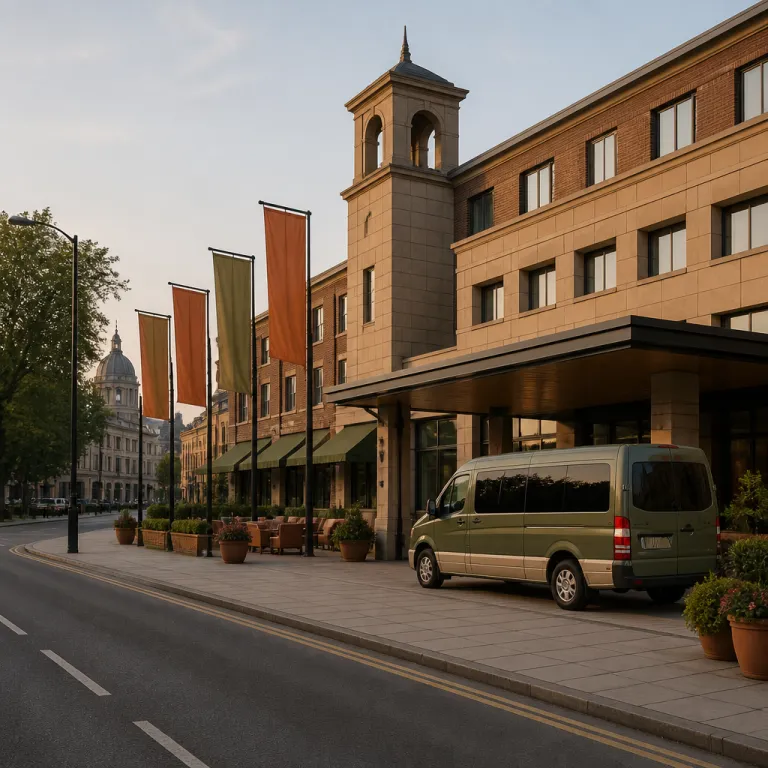
Section 1 – What the Nottingham Belfry’s chain affiliation reveals about brand power in a regional city
The story of the Nottingham Belfry Hotel shows how chain affiliation can transform a regional hotel marketing strategy. In Nottingham, a four star property on Woodhouse Way operated as part of a wider group, and that status shaped every decision about pricing, positioning, and communication. For directeurs marketing d’hôtel and agencies, the Nottingham Belfry’s group branding is a concrete case to reassess how brand systems really work in practice.
This hotel sat a few miles from the historic city centre, not in a traditional tourist quarter but close to business parks and arterial roads. That location meant the marketing team had to balance corporate meetings, leisure guests, and week end weddings, while still competing with central properties that benefit from walkable access to Nottingham Castle and the main shopping streets. The chain partnership provided central brand guidelines, loyalty programmes, and distribution power, yet local teams still had to adapt messaging to highlight easy parking, good access to the motorway, and the promise of a quiet night compared with some city centre hotels.
Brand affiliation also influenced how the hotel positioned its rooms, meeting spaces, and guest experience in relation to other accommodation options the area already offered. With 120 rooms and conference capacity for up to 700 guests, the property could market itself as a hybrid between a classic inn in Nottingham and a modern conference centre hotel. That scale required a sophisticated approach to reviews and rating management, because a single event with hundreds of guests could generate a wave of online feedback, both good and critical, that would impact the perceived rating of the property across major platforms.
Section 2 – Independent vs group marketing: lessons from the Nottingham Belfry Hotel administration
The Nottingham Belfry Hotel entered administration after a period of financial pressure, and this turning point offers sharp lessons for both independent hotels and groups. Administrators from FRP Advisory were appointed and the asset was marketed for sale, with the clear objective to preserve operations and protect jobs wherever possible. According to FRP Advisory’s public statements at the time of appointment (FRP Advisory, January 2026), the focus was on maintaining continuity while exploring a sale. For marketing leaders, the Nottingham Belfry chain story underlines how brand power alone cannot offset structural challenges in demand, cost, and debt.
When a hotel in Nottingham or any other United Kingdom city faces administration, the marketing narrative must shift quickly from long term brand building to short term reassurance. Communication teams need to check every channel, update the website, and coordinate with online travel agencies so that guests understand whether the hotel is still open, whether their stay will be honoured, and how to manage existing bookings. In this case, the hotel ultimately ceased trading in February 2026 following the January administration process (FRP Advisory announcements, 2026), which means that any marketing promise about free WiFi, breakfast options, or flexible check in became irrelevant overnight, yet the digital traces of those promises still circulate in reviews and meta search results.
One local corporate travel manager described the moment the closure became public: “We had delegates flying into East Midlands Airport for a Nottingham conference and suddenly their main hotel was gone from the system. The only thing that reassured them was clear, fast communication about where they would sleep instead.” Another agency contact recalled that within forty-eight hours they had to rebook more than one hundred room nights across three different hotels, a scramble that highlighted how fragile confidence can be when information is incomplete.
Group level marketers can use this example to refine their playbook for distressed assets, especially when planning Property Improvement Plans and capital expenditure. A useful framework is to treat every PIP as a potential marketing asset, aligning renovation stories with brand positioning and guest expectations, as detailed in this analysis on turning hotel PIP into a marketing asset for independent and group strategies. Independent hoteliers in Nottingham and beyond should read the Nottingham Belfry experience as a warning that visibility, reviews good enough to sustain a high rating, and competitive prices are necessary but not sufficient without a resilient financial structure.
Section 3 – Brand affiliation, positioning, and the Nottingham city competitive set
To understand the marketing implications of the Nottingham Belfry’s group affiliation, you need to map the full competitive set in the city. On one side, there are hotels in Nottingham city centre, close to Nottingham Castle, the main shopping streets, and the tram network, which can market walkability and nightlife. On the other side, there are out of town properties near business parks, the ring road, and routes towards East Midlands Airport, which compete more on parking, quiet rooms, and easy access by car.
The Nottingham Belfry Hotel sat in this second cluster, a few miles from the centre, which meant its marketing narrative had to emphasise different benefits from a typical hotel guests might book near the station. Instead of promising a view of Nottingham Castle or a short walk to Trent Bridge cricket ground, the hotel could highlight fast road access to the city, generous conference rooms, and the ability to host large corporate guests with ample parking. The chain connection helped by providing a recognised brand, loyalty points, and centralised campaigns, but local teams still had to articulate why staying a short drive from the centre could be more attractive for certain segments.
Comparing this case with other brand stories, such as the way Stora Hotellet Umeå’s BW Premier Collection affiliation reshaped its marketing, is instructive for any group or independent considering a new flag. The detailed case study on how a BW Premier Collection affiliation reshapes hotel marketing strategy shows how chain tools can be leveraged without losing local identity. For Nottingham hotels, the lesson is clear: chain affiliation should never erase the specific story of the city, the neighbourhood, and the guest journey from airport to hotel, whether that journey passes by East Midlands Airport, the cricket ground at Trent Bridge, or the business parks on the edge of town.
Section 4 – Managing reviews, rating, and pricing strategy around the Nottingham Belfry affiliation
Online reviews and rating dynamics are central to any hotel marketing strategy, and the Nottingham Belfry Hotel was no exception. A four star rating in a regional United Kingdom city sets a clear expectation about service, room quality, and amenities such as free WiFi and generous breakfast options. When a hotel closes or enters administration, unanswered reviews and outdated information about prices or availability can quickly erode trust in the wider brand, not just the single property.
Marketing directors should treat the Nottingham Belfry case as a reminder that review management must be coordinated between property, group, and administrators when a crisis hits. Guests who stayed for a conference or a leisure night may still post reviews months later, commenting on whether the rooms were quiet, whether the breakfast was good, and whether the free WiFi worked reliably during their stay. If those reviews good or bad remain unaddressed, they can drag down the perceived rating of related hotels Nottingham guests might consider, especially when meta search engines cluster several properties under one brand umbrella.
Pricing strategy also becomes more complex when a property is in flux, because revenue managers must balance short term cash generation with long term brand equity. Dropping prices too aggressively can attract guests seeking a Nottingham cheap deal but may also trigger suspicion about quality, especially if the hotel is a few miles from the city centre and not obviously comparable to a central inn in Nottingham. A more sustainable approach is to use targeted offers for specific segments, such as corporate guests attending events, while keeping public prices aligned with the perceived value of the hotel Nottingham travellers expect from a four star brand.
Section 5 – Location storytelling: from Nottingham Castle to Trent Bridge and East Midlands Airport
Location storytelling is one of the most underused levers in regional hotel marketing, and Nottingham offers a rich canvas. Guests do not think in abstract distances; they think in minutes, landmarks, and ease of movement between the hotel, the city centre, and key attractions like Nottingham Castle or Trent Bridge cricket ground. The Nottingham Belfry example shows how a property outside the immediate city centre can still craft a compelling narrative if it connects clearly to these mental maps.
For a Nottingham hotel located several castle miles from the historic core, communication should translate those miles into clear benefits for different guests. Corporate travellers may value being a short drive from both the office park and the city centre restaurants, while leisure guests might appreciate easy access to the motorway for day trips beyond Nottingham city. Marketing content can reference the distance in miles to Trent Bridge, the cricket ground, or East Midlands Airport, but always framed in terms of travel time, parking convenience, and the promise of a smooth check in and check out experience.
Independent hotels Nottingham wide can learn from this by integrating precise yet human centric location details into their websites, booking engines, and pre stay emails. Instead of generic claims about being “close to the city centre”, specify that the hotel is, for example, four Nottingham miles from Nottingham Castle, fifteen minutes from Trent Bridge on a match day, or twenty minutes from East Midlands Airport outside peak traffic. This level of clarity reduces friction, sets accurate expectations, and supports better reviews from guests who feel the hotel described their stay experience honestly.
Section 6 – Strategic benchmarks: what the Nottingham Belfry Hotel teaches about performance management
Every marketing leader needs robust benchmarks to evaluate whether a hotel strategy is working, and the Nottingham Belfry Hotel provides a cautionary tale. Even with a strong chain affiliation, a four star rating, and a solid base of corporate guests, the property still entered administration and ceased trading. That outcome underlines the need to align marketing KPIs with financial and operational indicators, not just visibility metrics or review scores.
One practical step is to audit how you benchmark your hotel against its competitive set in Nottingham city or any other market. Many teams still make the same five benchmarking mistakes, such as comparing prices without adjusting for location, room type, or included services like breakfast and free WiFi, as highlighted in this guide on benchmarking mistakes every hotel makes in a slow growth year. By refining your benchmarking approach, you can better understand whether your prices are truly competitive for a hotel Nottingham guests perceive as comparable in terms of rooms, service, and proximity to the city centre.
Another lesson is the importance of scenario planning for both independent hotels and groups, especially in secondary cities like Nottingham. You should model what happens to occupancy, average daily rate, and guest mix if a major corporate account leaves, if reviews suddenly dip, or if a new competitor opens closer to Nottingham Castle or the main cricket ground. Treat the Nottingham Belfry’s history as a prompt to stress test your own strategy, ensuring that your marketing, communication, and visibility plans can withstand shocks without putting the long term viability of the hotel at risk.
Key statistics and operational context
- The Nottingham Belfry Hotel offered approximately 120 rooms, positioning it as a mid sized conference and leisure property in Nottingham compared with smaller boutique hotels and larger city centre complexes (source: official hotel information and archived marketing materials).
- The hotel’s conference facilities could host up to 700 guests, which made it one of the more significant meeting venues in the Nottingham area and required a marketing focus on MICE segments as well as transient travellers (source: Christie & Co market data and sale brochure, 2026).
- The property entered administration in early January and subsequently ceased trading in February 2026, illustrating how quickly operational status can change and why marketing teams must update all guest facing channels in real time (source: FRP Advisory announcements and official sale listing, 2026).
- Rising hotel administrations across the United Kingdom have coincided with increased investor interest in hotel acquisitions, creating both risk and opportunity for brands considering new affiliations or repositioning strategies (source: UK hospitality and restructuring reports published between 2023 and 2026).
FAQ – the Nottingham Belfry Hotel and chain affiliation
Is the Nottingham Belfry Hotel currently open to guests ?
Is the Nottingham Belfry Hotel currently open? No, it ceased trading in February 2026 following the administration process that began the previous month (FRP Advisory announcements, 2026). Marketing and distribution teams should therefore ensure that all booking channels, websites, and partner communications clearly indicate that the hotel is closed to avoid guest confusion.
Who are the administrators of the Nottingham Belfry Hotel ?
Who are the administrators of the hotel? FRP Advisory. For any group level marketing or asset management discussions related to the Nottingham Belfry’s former chain affiliation, stakeholders typically need to coordinate with FRP Advisory and the appointed real estate agents, as referenced in the official administration and sale documents (FRP Advisory, 2026).
Is the Nottingham Belfry Hotel available for purchase ?
Is the hotel available for purchase? Yes, it's on the market. This status means that potential buyers, whether independent operators or hotel groups, can evaluate how a renewed chain affiliation or a repositioning strategy might unlock value in the Nottingham market, using the Christie & Co sale information and FRP Advisory notices as reference points.
What should guests do if they still hold a booking at the Nottingham Belfry Hotel ?
Guests who believe they still hold a booking should first check the latest operational status on official channels and then contact the booking intermediary they used, such as an online travel agency or corporate travel department. Since the hotel has ceased trading, refunds or alternative arrangements will usually depend on the policies of those intermediaries rather than the property itself.
How should travellers approach booking hotels in Nottingham after this closure ?
Travellers planning a stay in Nottingham city should verify that any chosen hotel is currently operating and check recent reviews to confirm service levels. They may also wish to compare hotels in Nottingham city centre with properties a few miles out, weighing factors such as free WiFi, breakfast options, parking, and proximity to Nottingham Castle or Trent Bridge cricket ground.